Custom Industrial Magnets in Australia — The Complete Buyer's Guide
Ferrous contamination costs Australian industry millions every year — in product recalls, machinery damage, regulatory fines, and reputation loss. The right custom industrial magnet, correctly specified for your process, eliminates the risk entirely. This guide explains how to choose, specify, and source the right solution for your operation.
Why Industrial Magnets Are Non-Negotiable for Australian Industry
Every processing industry in Australia has the same invisible threat: ferrous contamination. Metal fragments from equipment wear, tramp iron in raw materials, broken fasteners, and fine magnetic particles that enter product streams at virtually any point in the supply chain. If left unchecked, these contaminants cause machinery damage, product contamination, regulatory breaches, and in food or pharmaceutical applications, serious consumer harm.
The solution isn't complicated — but it does need to be right. A magnetic separator placed at the correct point in your process, with the appropriate gauss rating, configuration, and material specification, removes ferrous contaminants continuously and passively, without interrupting production flow or requiring an operator to stop and inspect every batch manually.
What makes the Australian context particularly important is the breadth of industries that depend on effective magnetic separation: grain and seed processing in the country's vast agricultural belt, food manufacturing lines from Queensland sugar mills to Tasmanian vegetable processors, hard-rock mining operations across WA and Queensland, and recycling facilities in every capital city. Each of these applications has different requirements — and each demands a magnet that is specifically designed for it, not simply the closest thing available from a catalogue.
⚡ Key Insight
Off-the-shelf magnets frequently underperform in real industrial environments. Gauss ratings measured at the magnet surface drop sharply with distance. A standard magnet rated at 12,000 gauss at the surface may deliver less than 3,000 gauss at 25mm — well below the threshold needed to capture fine ferrous particles in a fast-moving product flow. Custom design closes this gap.
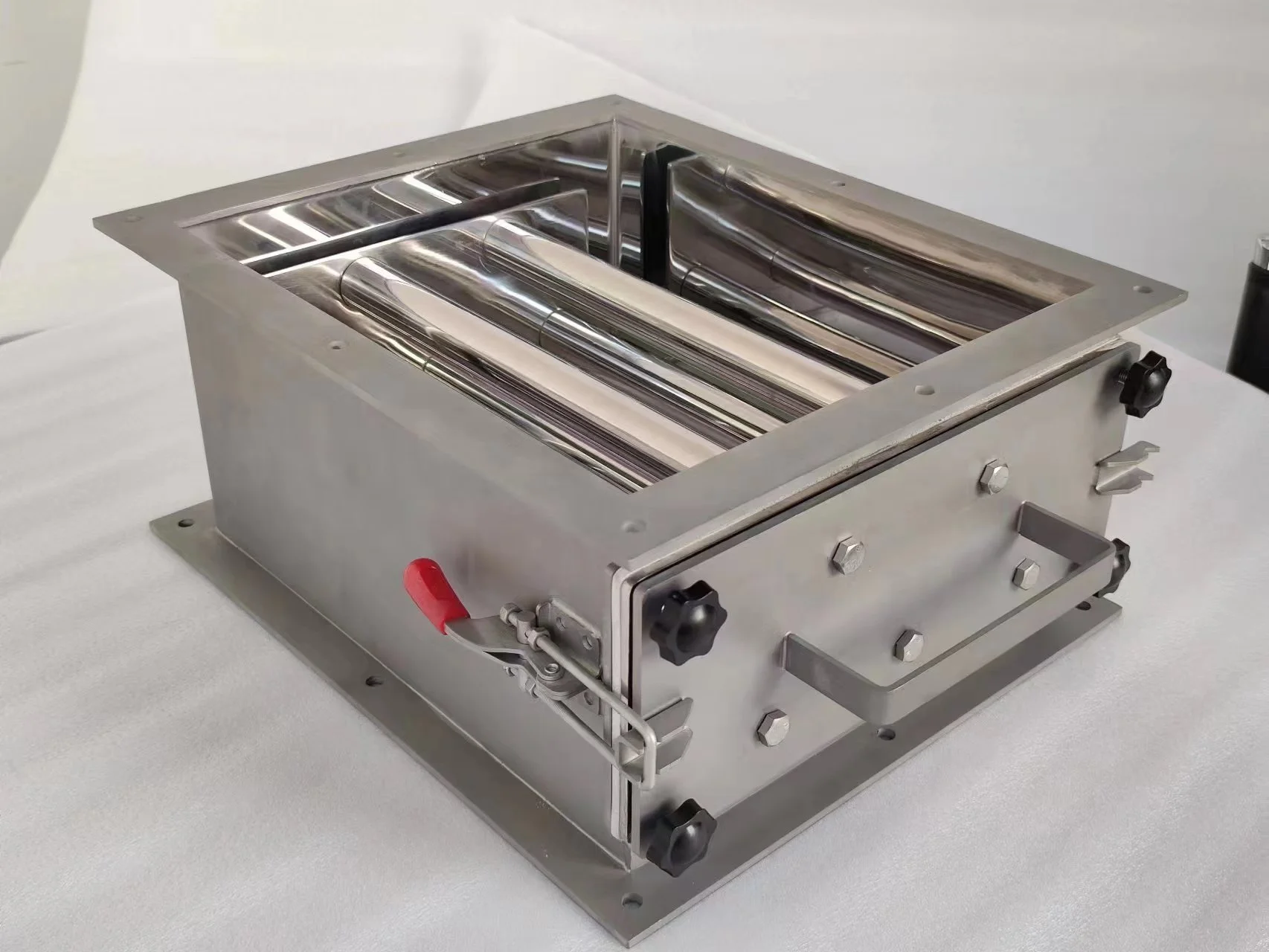
The Full Range: Seven Types of Industrial Magnets Explained
Industrial Supplies Direct designs and supplies seven categories of custom industrial magnet systems. Understanding what each does — and critically, where each belongs in a process — is the foundation of an effective contamination control strategy.
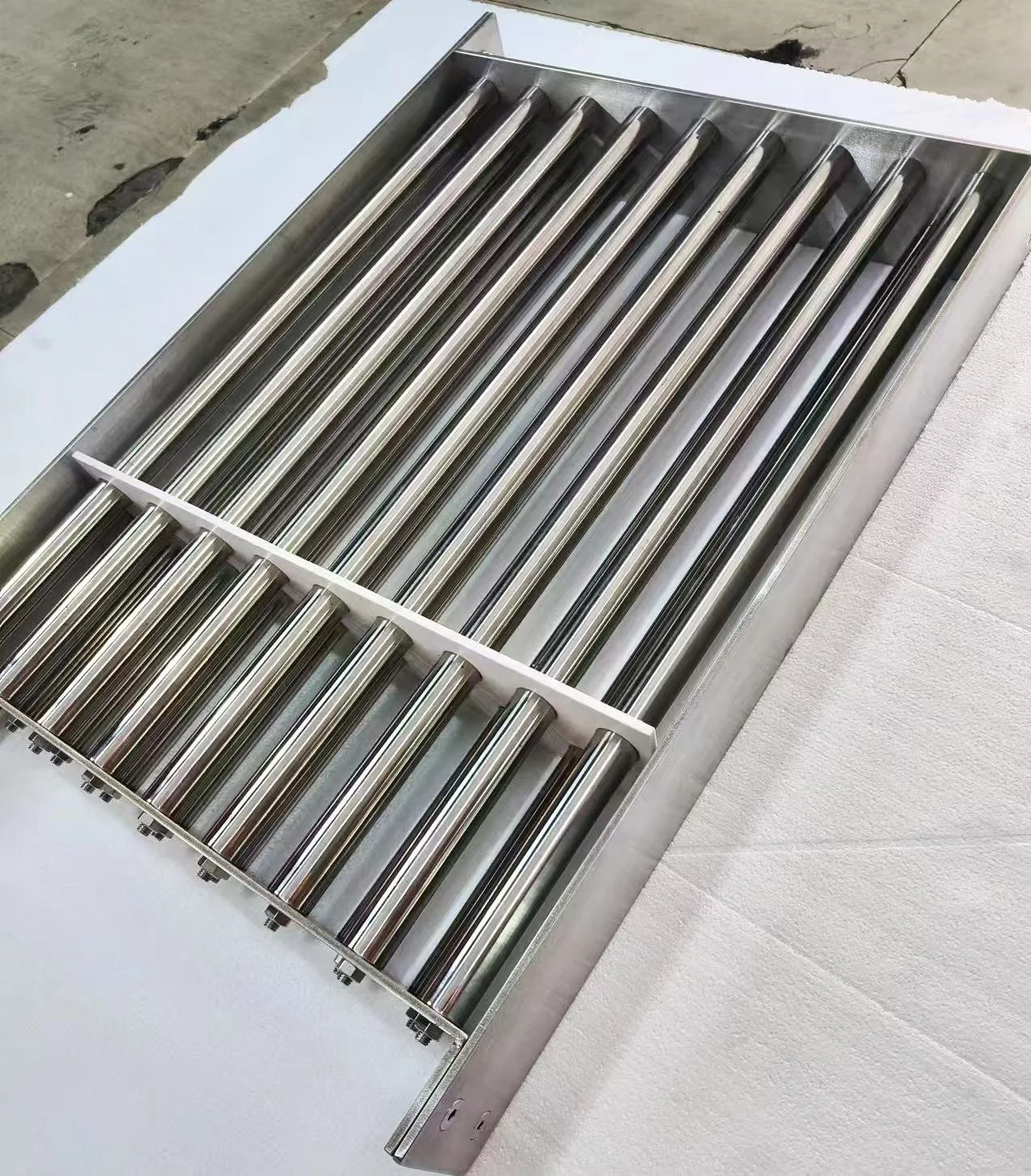
01
Magnetic Grates
A grid of magnetic tubes installed across a hopper, chute, or duct opening. Product flows through the grid and ferrous particles are captured on the tube surfaces. The most common first-line separation device for dry powders and granules. Custom-sized to your exact opening dimensions.
Powders · Granules · Hoppers · Gravity-Fed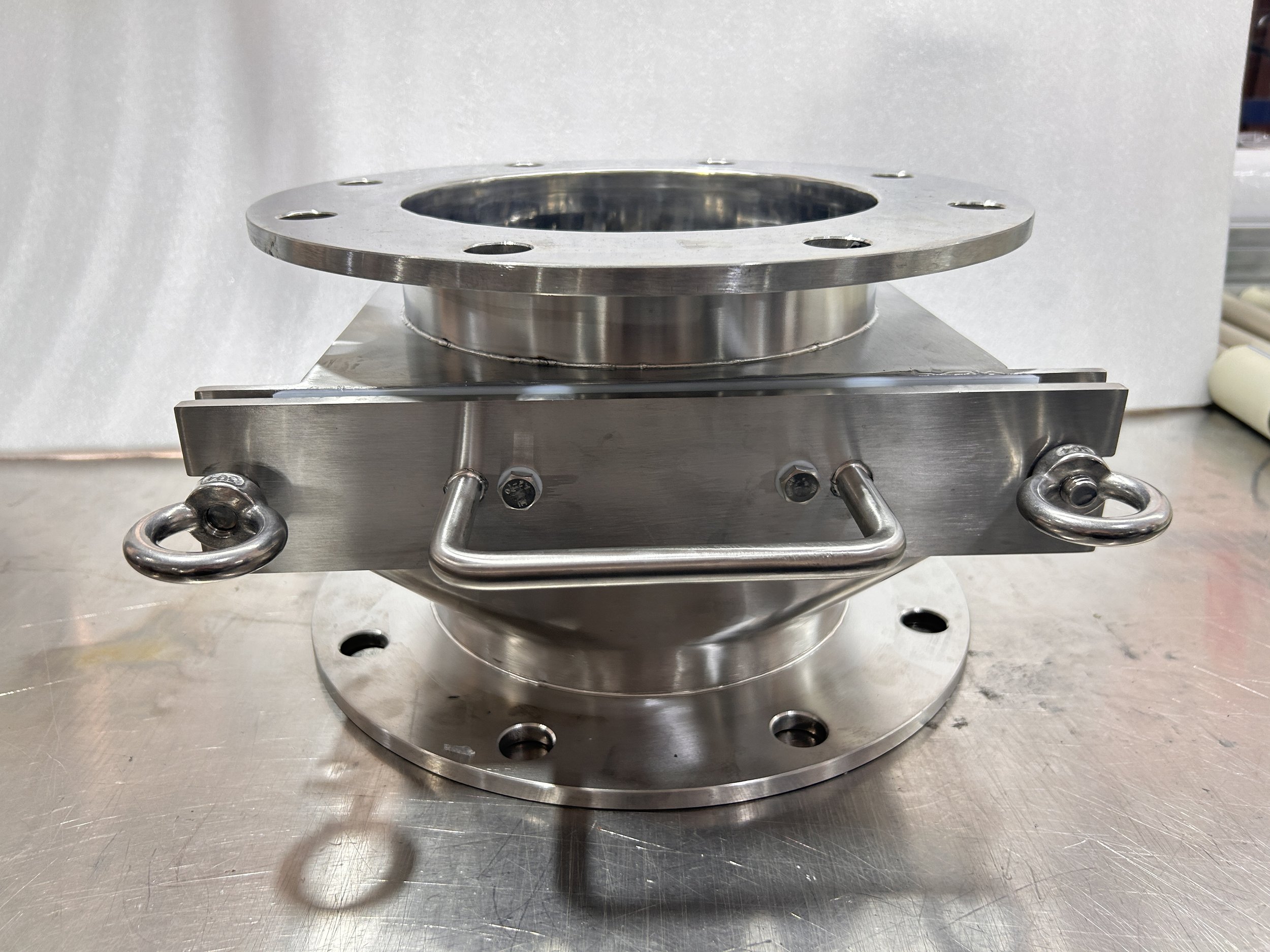
02
Drawer Magnets
Multiple magnetic grate rows stacked in a housing with sliding drawers. Each drawer pulls out independently for cleaning while production continues. Significantly higher capture efficiency than a single grate — ideal for food processing lines, flour mills, and pharmaceutical production where contamination risks are critical.
Multi-Row · Easy Clean · HACCP · High Volume
03
Plate Magnets
Flat magnetic panels installed in chutes, on conveyor sidewalls, or under conveyor belt decks. As material flows over or past the plate, ferrous particles are drawn to the magnetic face and held until the plate is cleaned. Effective for irregular or coarse material streams where a tube-grid format is impractical.
Conveyors · Chutes · Coarse Material · Bulk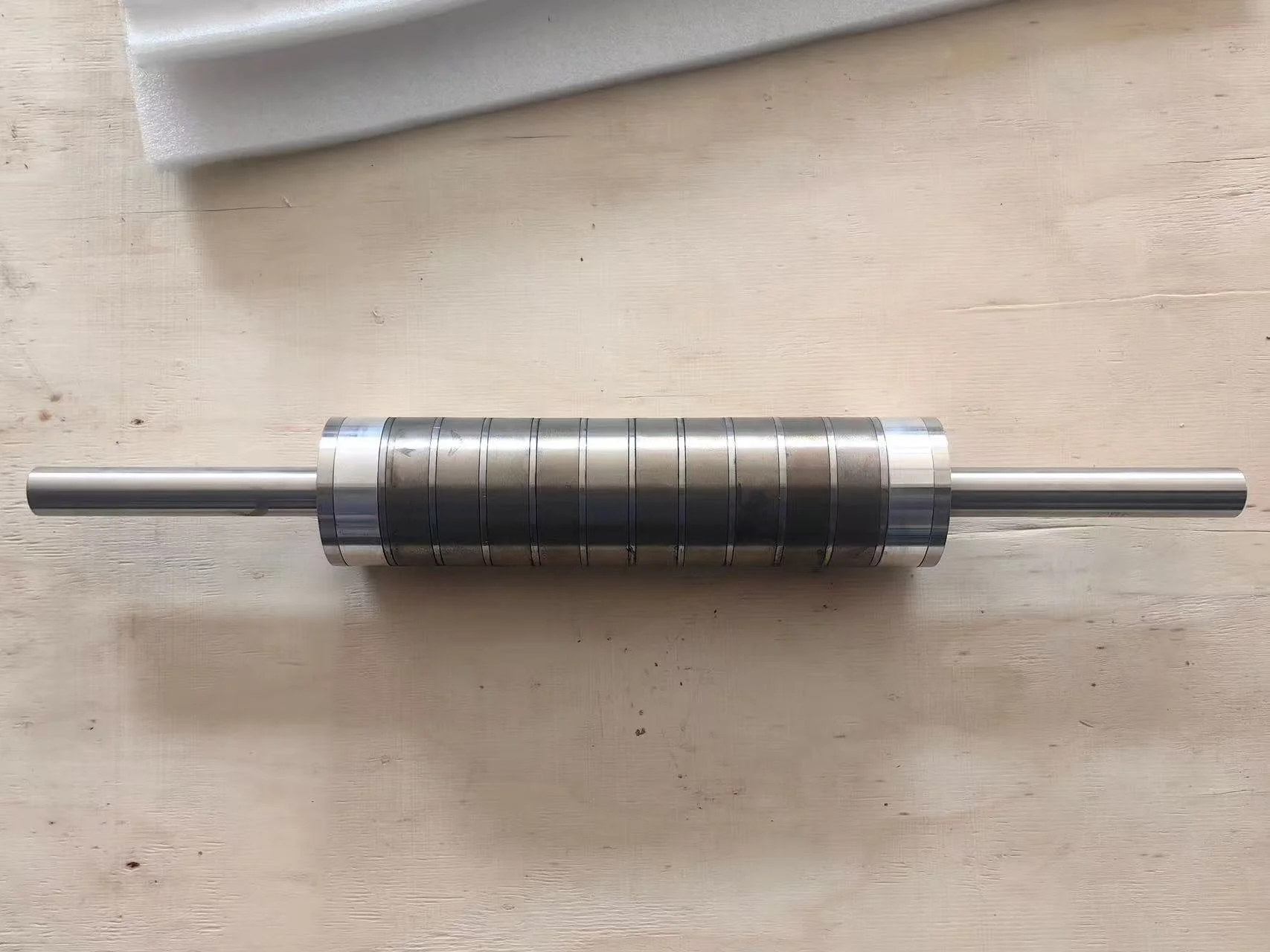
04
Suspended Magnets
Permanent or electromagnetic units suspended above conveyor belts to extract tramp iron from the moving material stream below. Available in manual-clean and self-cleaning (cross-belt) configurations. Particularly effective in mining, quarrying, and recycling where large or heavy ferrous objects — bucket teeth, bolts, wear plate fragments — are the primary hazard.
Overhead · Self-Cleaning · Mining · Heavy Tramp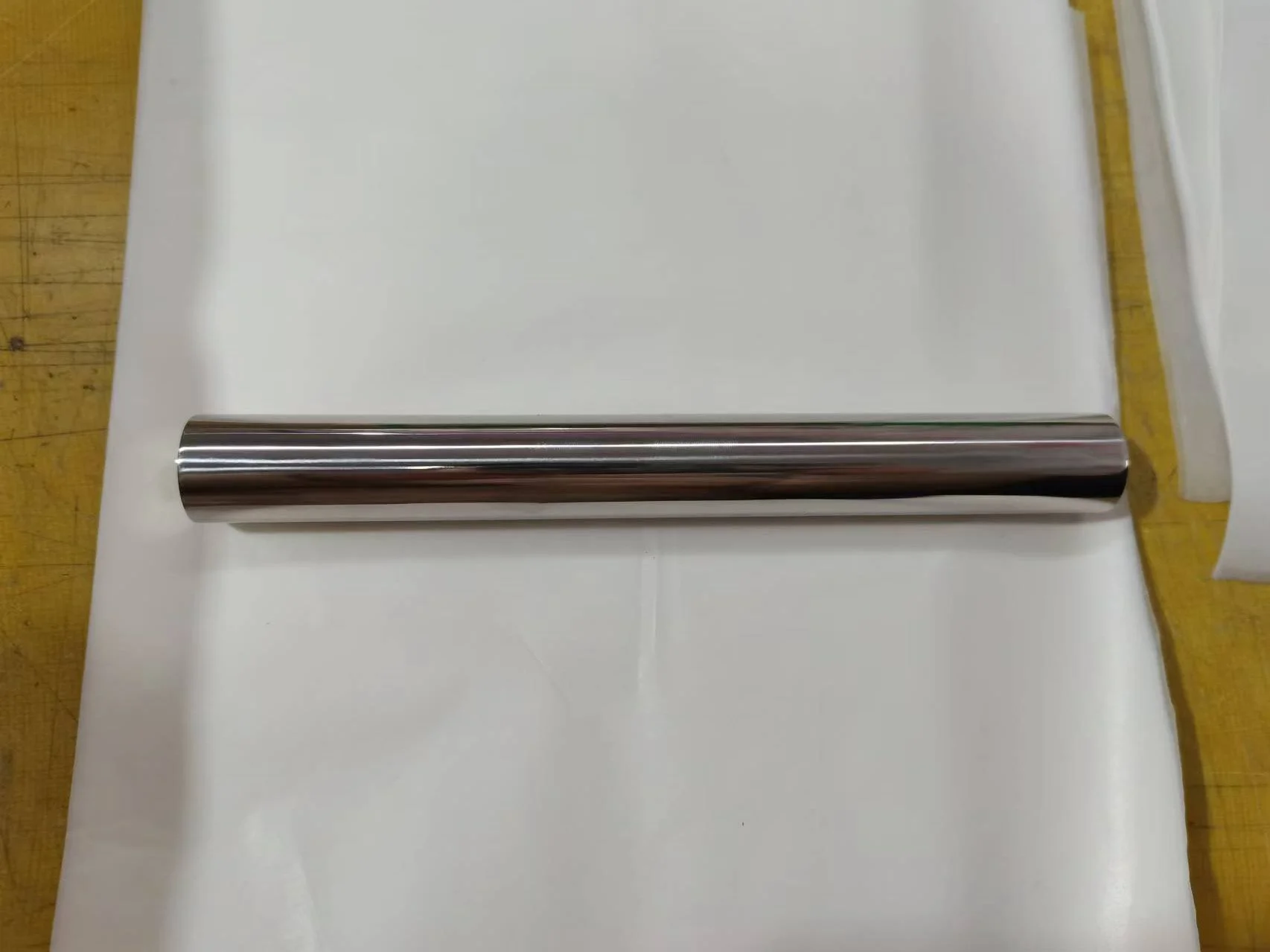
05
Magnetic Roll Separators
High-intensity permanent magnetic rolls used for fine particle and weakly magnetic mineral separation. Material is fed across the rotating roll surface — strongly magnetic particles are held and diverted while non-magnetic material falls away. Critical for industrial minerals processing, ceramics, and glass recycling where purity targets are exacting.
High Intensity · Fine Particles · Minerals · Ceramics
06
Magnetic Bars & Rods
Neodymium-core stainless steel tubes inserted directly into product flow — hoppers, ducts, silos, pipelines, and liquid processing systems. Simple, cost-effective, and highly versatile. Available in SS304 or SS316 construction, with gauss ratings from 8,000 to 13,000+. Single units or assembled as grate systems.
Insert-Style · Pipelines · Liquids · Versatile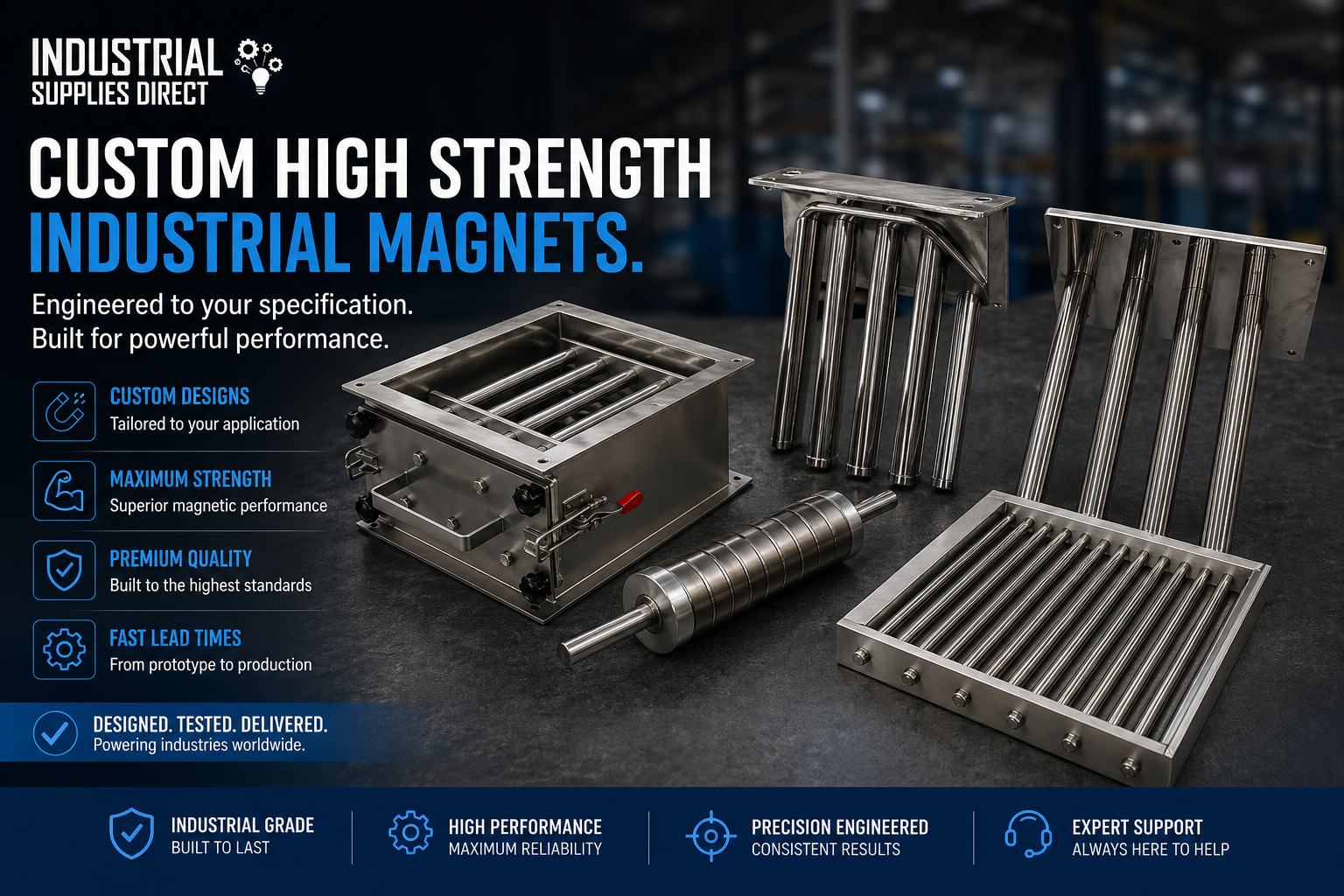
07
Custom Fabricated Magnet Systems
When a standard product category doesn't fit your application, we design from scratch. Non-standard hopper geometries, unusual mounting configurations, multi-stage contamination control systems, extreme temperature environments, and high-hygiene construction requirements are all solved through custom fabrication. Specify size, shape, gauss rating, material grade, and mounting — we build it.
Bespoke · Any Specification · Full Engineering SupportIndustrial Magnet Applications Across Australian Industry
Magnetic separation serves a different purpose in each industry — and the right magnet design for a flour mill is not the right magnet for a coal conveyor. Here's how the five primary industries served by Industrial Supplies Direct use industrial magnets, and what matters in each context.
The cost of one crusher rebuild caused by a single piece of tramp iron dwarfs the investment in an entire magnetic separation system for most mining operations. The question isn't whether you can afford a magnet — it's whether you can afford not to have one.
How to Specify the Right Industrial Magnet for Your Application
Selecting the wrong magnet — whether that means insufficient gauss strength, the wrong configuration, or unsuitable material construction — results in poor contamination capture, short service life, or both. Here's what to consider when specifying any industrial magnetic separation system.
1. Gauss Rating — Understanding Magnetic Strength
Gauss is the unit of measurement for magnetic flux density. In industrial magnetic separation, it determines how effectively a magnet captures fine ferrous particles, weakly magnetic materials, and contaminants at distance from the magnet face. Key benchmarks for Australian industrial applications:
| Application | Recommended Minimum Gauss | Notes |
|---|---|---|
| General industrial / grain handling | 8,000–10,000 gauss | Suitable for capturing large ferrous tramp metal from coarse materials |
| Food processing (HACCP) | 10,000–12,000 gauss | Required to capture fine particles and work-hardened stainless steel fragments |
| Pharmaceutical / fine chemicals | 12,000–13,000+ gauss | High-intensity neodymium required for sub-micron ferrous particle capture |
| Mineral separation / ceramics | High-intensity roll | Special-purpose equipment — consult for specification |
| Mining tramp iron protection | Variable by unit type | Suspended electromagnets or self-cleaning permanent magnets |
✅ Specification Tip
Always ask for the gauss reading at working distance — not at the magnet surface. A magnet rated 12,000 gauss at the surface may deliver only 4,000–6,000 gauss at the point where product actually contacts the magnetic field. This distinction is critical for accurate performance expectations.
2. Material Grade — SS304 vs SS316
The housing and tube material of your industrial magnet determines its suitability for different environments:
SS304 — Standard Industrial Grade
Suitable for dry industrial environments — grain handling, seed processing, mining, recycling. Lower cost. Not recommended for wash-down, food-contact, or chemical exposure applications.
SS316 — Food & Hygiene Grade
Required for food processing, dairy, pharmaceutical, and any application involving water, steam, cleaning chemicals, or sanitation cycles. Superior corrosion resistance. Mandated under most HACCP and food safety schemes in Australia.
3. Configuration — Matching the Magnet to Your Process
The physical configuration of your magnet must match both the geometry of your process equipment and the flow characteristics of your product:
- Gravity-fed dry powder and granule flows: magnetic grate or drawer magnet installed in hopper or chute opening
- Moving conveyor belts: suspended overhead magnet or plate magnet mounted on chute side
- Pneumatic conveying lines: inline magnetic cartridge or magnetic bars across the duct
- Liquid and slurry systems: magnetic bars or inline liquid trap assemblies in SS316
- Fine mineral separation: high-intensity magnetic roll separator with controlled feed rate
- High-volume coarse material (mining/quarrying): self-cleaning suspended electromagnet
4. Temperature Rating
Neodymium (NdFeB) magnets — the standard for high-gauss industrial applications — begin to lose magnetic strength above 80°C and can permanently demagnetise above 150°C. For elevated-temperature environments (drying ovens, high-temperature processing), specify high-temperature neodymium grades or Samarium Cobalt (SmCo) magnets, which maintain performance to 250°C+. Always declare your maximum operating temperature when specifying custom magnets.
Industrial Magnets in Australian Food Processing — HACCP & Compliance
Food safety is Australia's most demanding environment for industrial magnetic separation. The Food Standards Australia New Zealand (FSANZ) framework, combined with retailer-mandated HACCP requirements and international food safety standards (BRC, SQF, IFS), creates a compliance environment where magnetic separation is not a choice — it's an operational prerequisite.
What Australian Food Processors Need to Know
Australian food manufacturers supplying Woolworths, Coles, and major food service groups must demonstrate effective physical hazard controls as part of food safety plan verification. Magnetic separation at critical control points (CCPs) is one of the most commonly specified controls. The key requirements:
- Minimum 10,000 gauss at tube surface for food-grade magnetic separation (12,000+ recommended for fine particle capture)
- SS316 construction — required for all food-contact magnetic equipment in wet or wash-down environments
- Regular cleaning and testing records — magnets must be inspected, cleaned at defined frequencies, and gauss-tested periodically to confirm ongoing performance
- Installation at defined CCPs — typically immediately before bagging or filling, after any size-reduction or mixing step, and after any point where metal-to-metal contact occurs
- Management of weakly magnetic stainless steel — work-hardened SS304 and SS316 particles can exhibit weak magnetic behaviour; high-intensity magnets at close working distances are required to capture these
⚠️ Compliance Note
Installing a magnetic separator is the first step — not the last. A magnet loaded with captured ferrous material has significantly reduced capture efficiency. Cleaning protocols, testing frequencies, and documented records are just as important as the magnet itself for food safety scheme compliance.
Magnetic Separation in Australian Agriculture & Grain Handling
Australia's grain handling network — from paddock-side receival points through to export terminals — moves hundreds of millions of tonnes of grain every year. At every stage of this journey, grain is at risk of ferrous contamination: wire fragments from hay bales, nails and bolts from storage facilities, wear metal from augers and conveyors, and soil containing naturally occurring magnetic minerals.
Grain Receival and Storage
The first and most important point for ferrous contamination control in grain handling is at receival — before grain enters the storage system. A magnetic grate or drawer magnet installed at the intake pit removes the majority of tramp iron before it can cause auger or elevator damage, or contaminate stored grain. Given the scale of Australian bulk grain handling, even a single metal fragment missed at receival can contaminate an entire silo load — a risk that magnetic separation eliminates for a fraction of the cost of a contamination incident.
Seed Processing — Specific Requirements
Seed processing has tighter contamination requirements than bulk grain because seed quality certification schemes — administered by the Australian Seeds Authority and state bodies — include physical purity as a certification criterion. Ferrous particles in certified seed can cause certification failure and market access loss. Magnetic bars or grates installed immediately before bagging capture fine ferrous particles that pass through earlier gravity-separation stages. For export seed, this step is effectively mandatory.
Why Custom-Fabricated Magnets Outperform Off-the-Shelf Solutions
The industrial magnet market in Australia is dominated by catalogue products designed to suit the broadest possible range of applications. The trade-off is that catalogue products rarely suit any specific application perfectly. Custom fabrication addresses this directly.
Size & Shape
Custom dimensions to fit your exact hopper, chute, duct, or housing opening — eliminating bypass gaps that reduce capture efficiency in standard-size units.
Magnetic Strength
Gauss rating specified for your product characteristics — particle size, flow velocity, bulk density, and contamination type. Not the generic rating that suits the average application.
Material Selection
SS304 for dry industrial environments, SS316 for food-grade and hygiene-critical applications, with optional electropolish finish for pharmaceutical use.
Mounting & Integration
Flanges, brackets, and connection points designed to integrate directly with your existing equipment — no modification to existing infrastructure required.
Temperature Rating
Standard, elevated-temperature, and high-temperature neodymium grades specified to match your process operating conditions without risk of demagnetisation.
Multi-Stage Systems
Integrated contamination control systems combining multiple magnet types at different process points — designed as a complete solution, not individual components.
Industrial Supplies Direct sources custom-fabricated magnets direct from tier-one manufacturers, cutting out the middlemen that inflate the cost of industrial magnets in Australia. This direct sourcing model delivers premium custom magnet quality at pricing that is genuinely competitive with catalogue products — often at less than the cost of equivalent locally stocked items from large distributors.
Frequently Asked Questions — Industrial Magnets in Australia
A magnetic grate is a single grid of magnetic tubes installed across a chute or hopper opening — product flows through the grid and ferrous particles are captured on the tube surfaces. A drawer magnet is a multi-tray assembly where several magnetic grids are stacked in a housing with sliding drawers that pull out for cleaning. Drawer magnets offer higher capture efficiency for larger volume flows and are more practical to clean in food processing environments where batch cleaning is required.
HACCP guidelines and food safety standards generally recommend a minimum of 10,000 gauss at the magnet tube surface for food-grade magnetic separation. High-intensity neodymium magnets rated at 12,000–13,000 gauss are preferred for fine ferrous particle capture and for applications requiring the capture of work-hardened stainless steel fragments (which are weakly magnetic). Confirm the gauss specification at your working distance — not just at the tube surface.
Yes — this is the core service offered by Industrial Supplies Direct. Magnets can be designed to specific sizes, shapes, gauss ratings, material grades (SS304 or SS316), mounting styles, and temperature ratings to integrate directly with your existing hoppers, chutes, conveyors, or pipelines. Simply provide your equipment dimensions and process details and we'll design a solution that fits without modification to your existing infrastructure.
SS316 is recommended for food processing, dairy, pharmaceutical, and any application involving wash-down, moisture, steam, or chemical cleaning. The molybdenum content in SS316 provides superior corrosion resistance that SS304 cannot match in wet or acidic environments. SS304 is suitable for dry industrial environments — grain handling, seed processing, mining, and recycling — where corrosion resistance requirements are less demanding and cost is a greater factor.
Cleaning frequency depends on contamination load and application. In food processing, magnetic separation equipment should be cleaned at minimum with every batch or product changeover — accumulated ferrous material reduces capture efficiency and poses a contamination risk if dislodged. In agricultural and grain handling environments, weekly or monthly cleaning depending on throughput volume is typical. In mining and recycling, self-cleaning suspended magnets continuously discharge captured material, requiring only periodic maintenance inspection.
Yes. Industrial Supplies Direct is based in Launceston, Tasmania, and supplies custom industrial magnets to operations across all Australian states and territories. Remote locations including the WA Goldfields, NT pastoral operations, and Queensland outback facilities are regularly serviced. Contact us for freight options and lead times for your location.
The more detail you can provide, the more accurately we can specify the right solution. Ideally, include: (1) the type of product being processed and its characteristics (particle size, bulk density, temperature); (2) the point in your process where the magnet will be installed and the dimensions of the opening or installation space; (3) your required material grade (SS304/SS316); (4) whether the environment involves wash-down or temperature extremes; and (5) the type of contamination you are targeting. A photo of the installation point is always helpful.
Sourcing Custom Industrial Magnets in Australia — What to Look For
The Australian industrial magnet market includes large catalogue distributors, local manufacturers, and direct importers. Understanding the trade-offs helps you make the right sourcing decision for your operation.
| Sourcing Model | Advantages | Trade-offs |
|---|---|---|
| Large catalogue distributors | Stock availability; recognised brands; wide product range | Standard sizes only; high margins; limited customisation; slow turnaround on non-stock items |
| Local Australian manufacturers | Local engineering support; custom capability; fast service | Higher per-unit cost; limited to their own product range; long lead times for complex items |
| Direct import (Industrial Supplies Direct) | Custom fabrication from tier-one manufacturers; highly competitive pricing; broad specification range; fast delivery | Requires clear specification upfront; not suited to same-day emergency supply |
Industrial Supplies Direct occupies a specific and valuable position in this landscape: direct access to premium custom fabrication at pricing that catalogue distributors cannot match, without the lead times and engineering overhead of local manufacturing. By working directly with tier-one manufacturers, we compress the supply chain and pass the savings to Australian industry.
Request a Custom Magnet Quote
Tell us your application — product type, installation point, dimensions, and material requirements — and we'll specify and quote the right solution. Australia-wide supply from Launceston, Tasmania.